Where Is Porter Ranch?
One of the first things to understand about Porter Ranch is that its mailing address doesn’t always perfectly match its official Los Angeles neighborhood boundaries.
The 91326 ZIP code is commonly associated with Porter Ranch, but some properties south of Rinaldi Street may technically fall within Northridge while still using a Porter Ranch mailing address.
For homebuyers, this distinction can matter when researching schools, property taxes, neighborhood amenities, and comparable home sales. Always verify the exact location of a property rather than relying solely on its mailing address.
Old Porter Ranch vs. New Porter Ranch
When researching living in Porter Ranch, California, you’ll quickly discover that the community has two distinctly different personalities: old Porter Ranch and new Porter Ranch.
Old Porter Ranch includes many homes built during the 1960s, 1970s, and 1980s. These neighborhoods often feature larger lots, mature landscaping, wider streets, more privacy, and homes with individual character.
Another major advantage is that many older properties have no HOA fees or Mello-Roos assessments, potentially saving homeowners hundreds of dollars every month.
The area surrounding Porter Valley Country Club is particularly desirable, offering larger properties, custom architecture, mature trees, remodeled homes, and, in some cases, beautiful golf course views.
For buyers who want a neighborhood that doesn’t feel like every house came from the same blueprint, old Porter Ranch can be an excellent option.
New Porter Ranch Communities
Newer Porter Ranch communities offer a completely different experience.
Neighborhoods such as Westcliff, Bella Vista, The Heights, Avila, Aldea, and The Canyons have brought newer construction, luxury amenities, modern floor plans, and spectacular views to the area.
These homes often feature open-concept layouts, oversized kitchen islands, high ceilings, indoor-outdoor living spaces, energy-efficient construction, and contemporary finishes.
Westcliff, in particular, has become one of the area’s premier luxury communities, including guard-gated living and impressive hillside views.
The trade-off? Newer communities can come with HOA fees and Mello-Roos taxes, so buyers need to consider the total monthly cost—not just the listing price.
Porter Ranch Schools
For many families, schools are one of the biggest reasons to consider moving to Porter Ranch.
Porter Ranch Community School, Castle Bay Lane Charter Elementary, Beckford Charter for Enriched Studies, Darby Avenue Charter School, Robert Frost Middle School, and Granada Hills Charter High School are among the schools frequently considered by local buyers.
Granada Hills Charter High School is particularly well known and serves many families in the area.
Strong schools can also influence real estate demand. For families comparing public education with private-school tuition, highly regarded local schools can add significant perceived value to a home.
However, school boundaries can be property-specific and can change, so buyers should independently verify current enrollment eligibility before purchasing.
Parks, Hiking, and Outdoor Living
One of the biggest Porter Ranch pros is access to outdoor recreation.
Lime Kiln Canyon provides opportunities for hiking, trail running, mountain biking, and dog walking. The Palisades Trail System offers scenic views and popular sunrise and sunset hikes.
Families also have access to parks such as the Holly Burnson Memorial Park and E.T. Park.
Another major addition is the approximately 50-acre Jane and Burt Bachman Park, also known as Porter Ranch Community Park. The park provides trails, scenic overlooks, playgrounds, basketball and pickleball courts, and open recreational areas.
For people who want suburban living without giving up access to nature, this is a major selling point.
Shopping and Dining in Porter Ranch
Porter Ranch wasn’t always known for its shopping and dining options, but that has changed significantly.
The Vineyard Shopping Center has become a major community hub, offering Whole Foods, AMC Theatres, Nordstrom Rack, restaurants, coffee shops, fitness studios, and other retail options.
The local farmers market also adds to the community atmosphere, while youth sports and neighborhood events give residents opportunities to connect.
For many families, the combination of amenities and community is a major reason they choose to stay long-term.
The Biggest Downside: Wind
Let’s talk about the elephant—or perhaps the flying patio umbrella—in the room.
Porter Ranch can be windy.
Santa Ana winds can move patio furniture, send umbrellas flying, and leave pool owners dealing with additional leaves and debris.
Some residents barely notice it. Others absolutely hate it.
If you’re considering buying a home in Porter Ranch, visit the neighborhood at different times and ask current residents about the wind. It’s one of those things that’s difficult to understand from a listing description.
Wildfire Risk and Insurance Costs
The beautiful hills and open spaces surrounding Porter Ranch are part of its appeal, but they also create wildfire considerations.
Buyers should understand the property’s location, surrounding vegetation, fuel modification requirements, construction standards, and current insurance availability.
And that’s where another major issue comes into play: homeowners insurance in California.
Insurance companies have become increasingly selective in wildfire-exposed areas, while premiums have risen significantly in many parts of the state.
Before committing to a Porter Ranch home, obtain insurance quotes as early as possible. A house that looks affordable on paper can feel very different once the full cost of ownership is calculated.
The Aliso Canyon Factor
Aliso Canyon is another topic that comes up when researching Porter Ranch real estate.
In 2015, the Aliso Canyon facility experienced a major methane leak that put Porter Ranch in national headlines.
The event remains part of the community’s history, although monitoring, inspections, and safety measures have increased since then.
Some buyers consider it a non-issue, while others remain uncomfortable with the area’s history. The important thing is to research the facts and make a decision you’re comfortable with.
HOA Fees and Mello-Roos Taxes
Newer Porter Ranch developments can offer beautiful amenities, gated entrances, maintained common areas, recreation facilities, and community landscaping.
But those conveniences aren’t free.
HOA fees and Mello-Roos assessments vary by neighborhood and property, so buyers should examine the exact costs before making an offer.
This is one area where older Porter Ranch homes can have a financial advantage.
The Porter Ranch Commute
Porter Ranch offers a suburban lifestyle, but that comes with a transportation trade-off.
It’s largely car dependent, and public transportation isn’t usually the primary choice for residents.
The 118 Freeway provides relatively convenient access to parts of the San Fernando Valley, including Cal State Northridge, Woodland Hills, and Warner Center.
But commuting regularly to Santa Monica, Century City, Beverly Hills, or other Westside destinations can be a different story.
If your daily life revolves around the Westside, calculate the commute carefully before deciding that Porter Ranch is right for you.
Who Should Move to Porter Ranch?
Porter Ranch may be an excellent fit if you’re looking for:
- Strong school options
- A family-oriented community
- Larger or newer homes
- Hiking trails and parks
- Modern shopping and dining
- A suburban atmosphere
- Scenic views and open space
- A strong sense of community
It may be less appealing if you prioritize a highly walkable urban lifestyle, nightlife outside your door, extensive public transportation, or a short commute to the Westside.
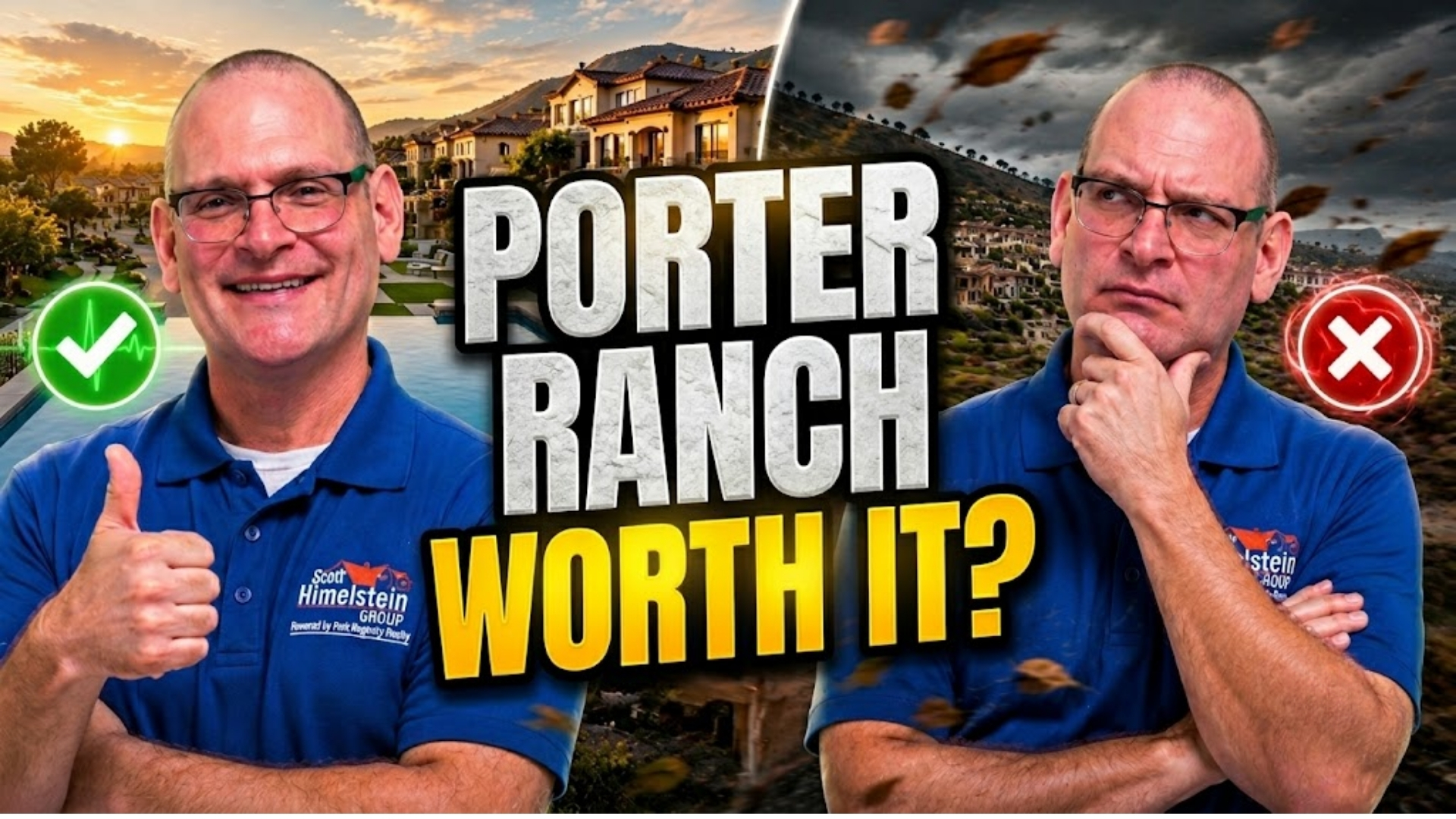
Is Porter Ranch Worth the Premium?
So, is Porter Ranch worth it?
For many buyers, absolutely.
The combination of schools, parks, trails, shopping, newer construction, established neighborhoods, and community amenities makes Porter Ranch one of the strongest suburban choices in the San Fernando Valley.
But the premium isn’t simply about the house.
You’re also paying for the lifestyle—and that lifestyle comes with trade-offs.
Wind, wildfire exposure, insurance costs, HOA fees, Mello-Roos taxes, and commuting should all be part of your buying decision.
The smartest approach isn’t to ask whether Porter Ranch is universally “the best” place to live in Los Angeles. Instead, ask whether Porter Ranch fits your budget, commute, family needs, and preferred lifestyle.
Because the perfect neighborhood isn’t necessarily the one with the most impressive homes. It’s the one that works for the way you actually live.