The Los Angeles Housing Shortage Didn’t Start With COVID
The biggest reason Los Angeles home prices remain high in 2026 is surprisingly simple: there aren’t enough homes.
This housing shortage didn’t suddenly appear during the pandemic. Its roots go back to the 2008 housing crisis, when builders across the country went bankrupt or dramatically scaled back construction. For years afterward, new housing construction failed to keep pace with population growth.
Nearly two decades of underbuilding created a massive supply problem.
National estimates vary, but the United States is widely considered to be millions of homes short of what is needed. Los Angeles has an even tougher challenge because the region is already constrained by geography, zoning, environmental regulations, permitting costs, and lengthy development processes.
In other words, Los Angeles can’t simply flip a switch and build its way out of the shortage.
Los Angeles Has a Supply Problem—and Buyers Feel It
Los Angeles is particularly difficult when it comes to adding new housing.
There is limited land, established neighborhoods, expensive construction, strict regulations, and a development approval process that can take years. Larger projects may also face environmental reviews, infrastructure requirements, and substantial impact fees.
And when desirable neighborhoods receive only a small number of homes for sale, competition can become intense.
That’s exactly what happened with that Granada Hills fixer-upper.
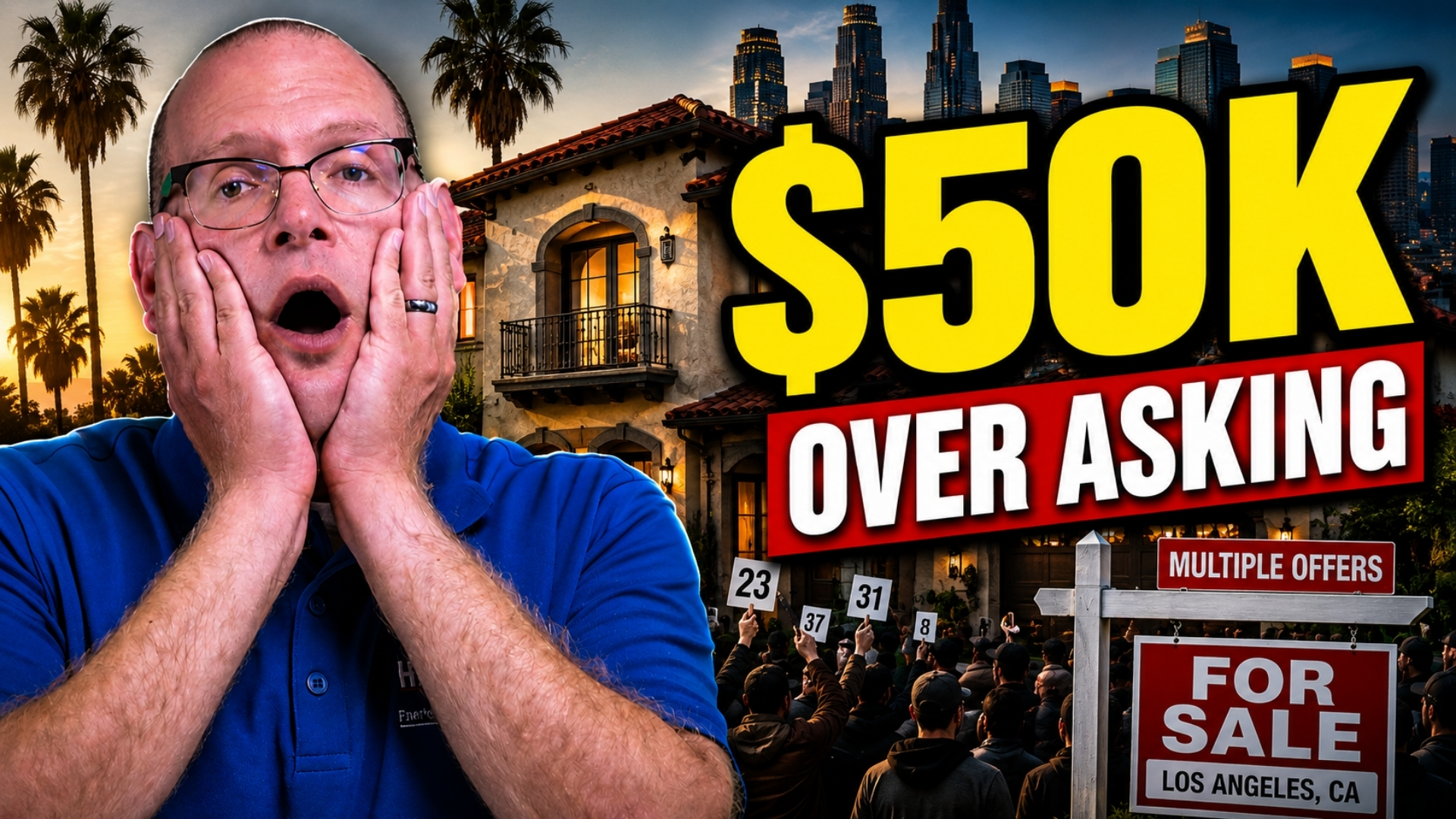
The home was listed for $1.35 million despite dated finishes, old bathrooms, worn carpet, water damage, and significant renovation needs. A buyer offered $50,000 over asking with cash and no financing or appraisal contingency—and still lost.
The winning offer pushed the sale price more than $100,000 above the original asking price.
That’s not necessarily a seller “getting greedy.” It’s what happens when multiple buyers compete for a limited supply of homes.
The Mortgage Rate Lock-In Effect Is Keeping Owners in Place
Another major factor behind low housing inventory in Los Angeles is the mortgage rate lock-in effect.
During the pandemic, many homeowners secured mortgage rates around 2% to 3%. Today, mortgage rates are dramatically higher.
Imagine someone with a $900,000 mortgage at 2.75%. Their principal and interest payment could be around $3,700 per month. Replacing that mortgage with a similar loan at roughly 6.5% could push the payment closer to $5,700.
That’s approximately $2,000 more every month.
For many homeowners, moving doesn’t make financial sense unless they have a compelling reason.
Job relocation, divorce, a death in the family, or another major life change can force a sale. Otherwise, homeowners with exceptionally low mortgage rates have a powerful incentive to stay where they are.
Every homeowner who stays put is one less property available for buyers.
Serious Buyers Are Still Competing for Desirable Homes
Higher mortgage rates have certainly reduced buyer demand compared with the frenzy of 2021 and 2022.
But reduced demand doesn’t mean demand has disappeared.
Los Angeles still has plenty of buyers who need to move. Families outgrow their current homes. People relocate for work. Others have accumulated significant equity and can put substantial cash toward their next purchase.
These equity-rich Los Angeles home buyers are especially important in today’s market.
They may not love a 6.5% mortgage rate, but they’re not necessarily waiting for rates to return to 3% before buying. They have a reason to move—and they’re prepared to compete when the right property appears.
That’s why a well-priced home in Granada Hills, Porter Ranch, Northridge, Chatsworth, Encino, Sherman Oaks, or other desirable San Fernando Valley neighborhoods can still generate multiple offers.
Why Builders Can’t Simply Build Affordable Homes
So why don’t builders solve the problem?
Because building in Los Angeles is expensive.
Construction costs can run hundreds of dollars per square foot before accounting for land, financing, permits, labor, infrastructure, marketing, and other expenses.
And land itself can be extraordinarily expensive.
A developer has to sell a finished property at a price that covers all of those costs while still producing a reasonable return. If the economics don’t work, the project doesn’t get built.
That’s one reason new construction in Los Angeles frequently comes with a premium price tag.
New homes don’t necessarily bring down resale prices when the cost of creating those new homes is already extremely high.
Wildfire Displacement Has Added Another Layer of Demand
Los Angeles also has some unique factors affecting specific neighborhoods.
Wildfire displacement has pushed some families back into the housing market as they search for replacement homes. Insurance proceeds and significant down payments can give these buyers substantial purchasing power.
Some displaced homeowners are looking toward San Fernando Valley communities such as Granada Hills, Porter Ranch, Chatsworth, West Hills, Encino, and Sherman Oaks.
When those buyers enter an already inventory-starved market, competition can become even stronger.
The True Cost of Owning a Los Angeles Home Is Rising
The purchase price is only one part of the equation.
Homeowners also have to deal with Los Angeles property taxes, homeowners insurance, utilities, maintenance, and renovation costs.
Insurance has become particularly challenging in California, especially in areas with elevated wildfire risk. Some homeowners may face significantly higher premiums or need coverage through the California FAIR Plan.
Then there are the homes that look affordable until you open the renovation spreadsheet.
A $1.35 million fixer might require hundreds of thousands of dollars in upgrades. Add construction delays, temporary housing, permits, materials, and carrying costs, and suddenly the “deal” can become a very expensive project.
The better question isn’t simply:
“Can I afford to buy this house?”
It’s:
“Can I afford to own and maintain this house?”
Renting Isn’t Necessarily the Easy Alternative
For many Los Angeles residents, renting doesn’t provide much relief.
A two-bedroom apartment in a desirable San Fernando Valley neighborhood can easily cost thousands of dollars per month. Renters aren’t building home equity, and housing costs can change over time.
That doesn’t automatically make buying the better financial decision for everyone, but it helps explain why some buyers continue entering the market despite higher mortgage rates.
For people planning to stay in Los Angeles long term, homeownership can still make sense when the numbers and lifestyle goals align.
What This Means for Los Angeles Buyers and Sellers
The Los Angeles housing market in 2026 is being shaped by several forces at the same time: decades of underbuilding, limited land, mortgage rate lock-in, expensive construction, persistent demand, wildfire displacement, and rising ownership costs.
None of these problems can be solved overnight.
For buyers, preparation matters more than ever. Understanding neighborhood-level inventory, knowing your financing options, calculating renovation and ownership costs, and creating a competitive offer strategy can make a significant difference.
For sellers, today’s market may reveal more equity than expected—but pricing and strategy still matter. A home doesn’t automatically sell for top dollar simply because inventory is limited.
The Granada Hills bidding war is a perfect example.
A buyer can bring cash, waive major contingencies, offer substantially above asking, and still lose when another buyer is willing to go even further.
That’s the reality of a competitive Los Angeles real estate market.
The bigger story isn’t simply that sellers are asking too much.
It’s that demand continues to collide with limited supply.
Until Los Angeles adds substantially more housing—or enough homeowners become willing to sell—the competition for desirable properties is likely to remain a major factor in home prices.
For anyone buying or selling in Los Angeles, the smartest move isn’t guessing where the market is going.
It’s understanding the numbers, knowing the neighborhood, and having a strategy before making the next move.