
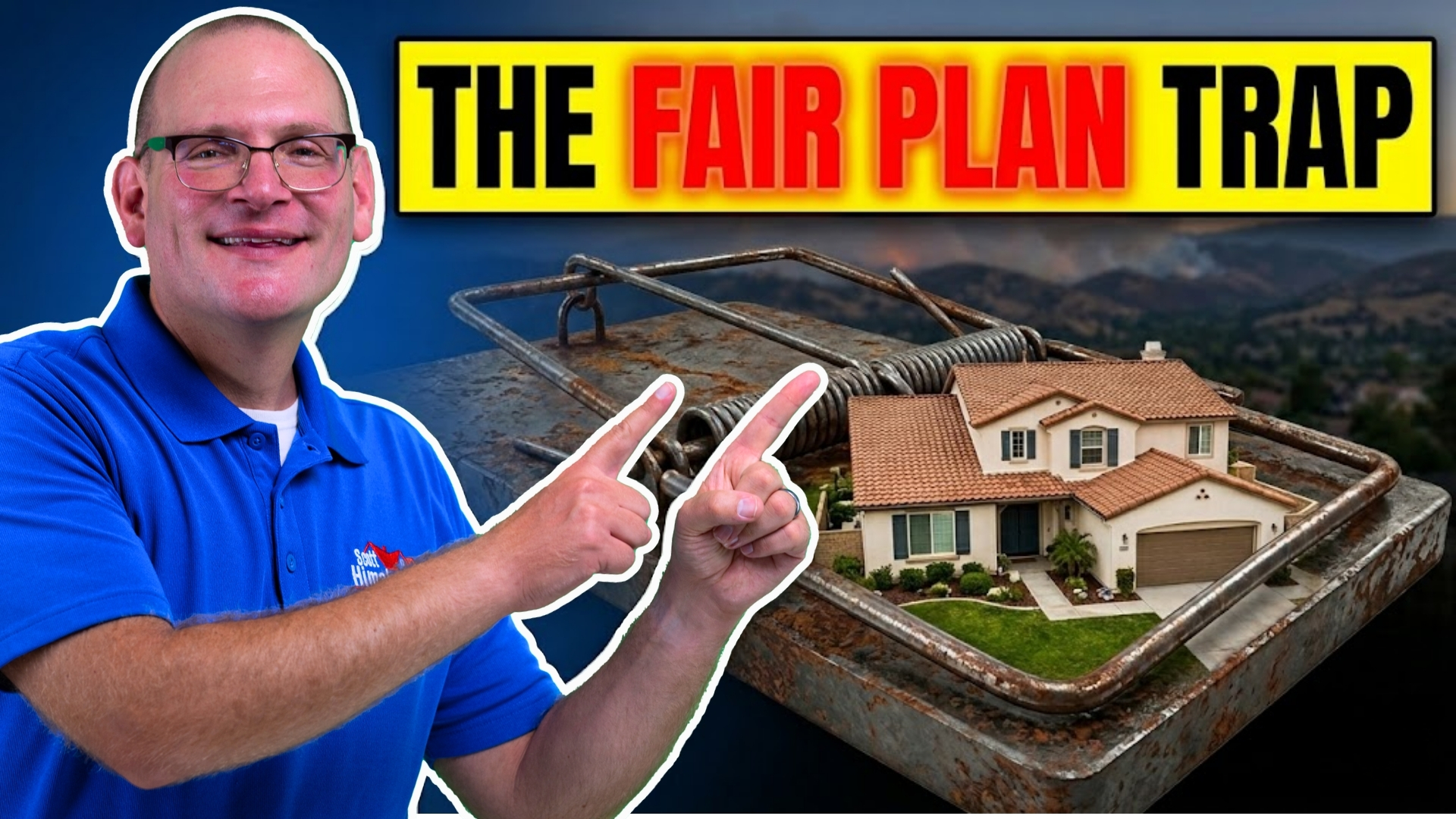
California Homeowners Are Feeling the Insurance Squeeze
For years, homeowners typically thought about three big costs: the mortgage, property taxes, and maintenance. In California, there is now another expense demanding just as much attention—homeowners insurance.
The California Fair Plan has become increasingly important as traditional insurance companies reduce their exposure to California. For homeowners in areas such as Los Angeles, Porter Ranch, Granada Hills, Chatsworth, and other wildfire-risk communities, finding affordable coverage can be increasingly difficult.
Now, with a potential nearly 30% California Fair Plan insurance increase, homeowners are asking a very reasonable question: how much more expensive is it going to be to own a home in California?
What Is the California Fair Plan?
The California FAIR Plan was created as an insurer of last resort. Its purpose is to provide basic property insurance to homeowners who cannot obtain coverage through the traditional insurance market.
It was never intended to replace the standard homeowners insurance market for large numbers of Californians.
But that is increasingly what is happening.
As insurers reassess wildfire exposure, rebuilding costs, and financial risk, some have stopped writing new policies, reduced coverage, or issued non-renewals. Homeowners who previously had traditional insurance can suddenly find themselves searching for another option.
For many, the California Fair Plan becomes that option.
Why Is California Homeowners Insurance Getting More Expensive?
Wildfire risk is one of the biggest reasons.
California has experienced devastating wildfires that have destroyed entire communities and generated enormous insurance claims. Insurers have to consider the potential cost of future disasters when determining where and how much they are willing to insure.
Then there is the cost of rebuilding.
Construction labor, materials, permits, and other expenses have increased significantly. If a home is destroyed today, rebuilding it may cost substantially more than it would have several years ago.
Inflation adds another layer of pressure.
Regulation also plays a role. California has a highly regulated insurance market, and insurers have argued that traditional rate-setting processes have not always allowed them to adjust quickly enough to changing catastrophe risks.
The result can be a difficult cycle: higher risk leads to higher potential losses, which leads to insurers pulling back, which leaves fewer options for homeowners.
The Real Cost Is Bigger Than the Insurance Bill
A higher insurance premium might sound like just another monthly expense. But in an expensive market like Los Angeles, even a few hundred additional dollars per month can change a household’s affordability calculation.
Consider a homeowner who locked in a relatively low mortgage rate several years ago. The mortgage may still be manageable, but property taxes, utilities, maintenance, repairs, and insurance can all increase.
Suddenly, that supposedly affordable home has a much higher monthly carrying cost.
This is why California home affordability in 2026 isn’t simply about the purchase price or mortgage rate anymore.
Homeowners need to consider the complete picture:
- Mortgage payment
- Property taxes
- Homeowners insurance
- HOA fees
- Utilities
- Maintenance
- Repairs
- Potential insurance deductibles
The purchase price may be attractive, but if insurance costs are extremely high, the monthly ownership cost can tell a very different story.
How Rising Insurance Costs Could Affect Home Buyers
For buyers, insurance should be investigated before making major decisions during escrow.
Imagine finding your dream home, negotiating the purchase price, getting excited about moving in—and then discovering that the insurance quote is thousands of dollars higher than expected.
That’s not a small surprise.
Insurance costs can affect a buyer’s overall housing budget and, depending on the loan and underwriting requirements, may influence qualification calculations as well.
This is particularly important when purchasing a property in a high wildfire-risk area of Los Angeles.
Buyers should ask about insurance availability and obtain quotes as early as possible rather than waiting until late in the transaction.
Could Insurance Affect Los Angeles Home Values?
Potentially, yes.
Real estate values are influenced by supply and demand, and affordability plays a major role in buyer demand.
If a property becomes significantly more expensive to insure, some buyers may simply move on to another property.
Others may negotiate more aggressively.
Over time, buyers could increasingly favor homes located in areas perceived as having lower wildfire exposure and better insurance availability.
That doesn’t mean homes in higher-risk areas suddenly become undesirable. Los Angeles remains a highly sought-after market. But insurance could become another factor influencing Los Angeles real estate prices and buyer behavior.
What Homeowners Can Do to Improve Insurability
The insurance conversation isn’t necessarily just about paying more.
Homeowners can also look at ways to reduce wildfire exposure and potentially improve their ability to obtain coverage.
Depending on the property and insurer, important considerations may include:
- Maintaining defensible space
- Clearing excess vegetation
- Trimming trees
- Updating roofing materials
- Installing ember-resistant vents
- Improving exterior fire resistance
- Addressing outdated electrical systems
- Keeping the property well maintained
Not every improvement will automatically result in a discount, so homeowners should speak with their insurance professional before spending money specifically for insurance purposes.
The goal isn’t simply to make a home look better. In some situations, wildfire mitigation and home hardening can help improve insurability.
California FAIR Plan Policyholders Need to Understand Their Coverage
One common misconception is that the California FAIR Plan works exactly like a traditional homeowners insurance policy.
It doesn’t necessarily provide the same breadth of coverage.
FAIR Plan policyholders should carefully understand their policy, deductibles, exclusions, limits, and whether additional coverage is needed through a companion or supplemental policy.
Don’t wait until a disaster happens to discover what your policy does—or doesn’t—cover.
Review your coverage regularly and ask questions.
What Sellers Should Know Before Listing
Insurance isn’t just a buyer issue.
Sellers should also understand how insurance availability could affect the marketability of their property.
If a home has limited insurance options or unusually high premiums, potential buyers may hesitate. That could affect negotiations, timing, and ultimately the property’s appeal compared with competing listings.
This makes insurance information increasingly relevant when preparing a Los Angeles home for sale in 2026.
A seller who understands the property’s insurance situation can be better prepared for questions from buyers and their agents.
Is California’s Insurance Crisis Going Away?
Probably not overnight.
Wildfire exposure, increasing rebuilding costs, climate-related risks, and insurance-market uncertainty are larger issues that won’t be solved with a single policy change.
California may see regulatory reforms, new insurance models, increased catastrophe modeling, additional wildfire mitigation efforts, and potentially greater participation from private insurers.
But homeowners shouldn’t build their financial plans around the assumption that insurance costs will suddenly return to the way they were years ago.
The smarter approach is preparation.
What This Means for the San Fernando Valley
For homeowners and buyers in Porter Ranch, Granada Hills, Chatsworth, Encino, Tarzana, and surrounding San Fernando Valley communities, insurance availability deserves a place in the real estate conversation.
When comparing homes, don’t look only at square footage, school districts, commute times, and purchase price.
Ask another question:
How much will it actually cost to own this home every month?
That question could become increasingly important as California’s insurance market continues to evolve.
The Bottom Line for California Homeowners
California real estate isn’t doomed. People still want to live here because of the lifestyle, economy, weather, culture, and opportunities.
But the economics of homeownership are changing.
A mortgage payment is only one piece of the puzzle. California homeowners insurance costs, property taxes, utilities, maintenance, and wildfire risk can all influence the true cost of owning a home.
For homeowners, the best strategy is to stay proactive: shop for coverage, review policies carefully, investigate mitigation options, and understand potential future costs.
For buyers, get insurance information early—before you fall in love with the house and before unexpected costs derail the transaction.
And for sellers, understand that insurance availability may increasingly become part of the property’s overall marketability.
The California Fair Plan may have started as a last resort, but in today’s market, understanding it could be essential for anyone buying, selling, or owning property in California.